The debate over where to house business logic is one of the oldest and most contested in software engineering. If you ask a database administrator (DBA), they might champion the unmatched performance of data-proximity. Ask a modern full-stack developer, and they will likely advocate for the flexibility and testability of the application layer.
As system architectures have evolved from monolithic client-server models—like thick desktop applications built in classic VB—to modern, distributed web APIs, the “best practice” has undeniably shifted. However, the answer is rarely a simple binary.
In this comprehensive guide, we will break down the pros, the cons, and the modern consensus on whether your business logic should live in stored procedures or application code.
What Exactly is “Business Logic”?
Before deciding where it goes, we need to define what it is. Business logic (or domain logic) is the custom set of rules that dictate how data is created, displayed, stored, and changed within a specific domain.
It is the code that says:
-
“If a customer buys more than 10 items, apply a 15% discount.”
-
“A user cannot be deleted if they have active, unpaid invoices.”
-
“When a part is removed from the manufacturing warehouse, update the inventory count and alert the procurement team if stock falls below the minimum threshold.”
Business logic is the heart of your application. It is distinct from UI logic (how things look, often handled in frameworks like React) and data access logic (the basic CRUD operations).
The Case for Stored Procedures (Database-Centric)
Placing business logic in the database via stored procedures was the gold standard for many years, particularly in the 1990s and early 2000s. Relational databases like SQL Server and Oracle are incredibly powerful, and leveraging them for processing comes with specific advantages.
1. Unmatched Data Proximity and Performance
The most compelling argument for stored procedures is performance. When logic lives in the database, you eliminate network latency. If a process requires analyzing millions of rows to calculate a complex aggregate before updating a single record, doing it in a stored procedure is orders of magnitude faster. You avoid dragging megabytes of data across the wire to an application server just to send a tiny result back.
2. Centralized Logic for Multiple Clients
Historically, a single database might serve multiple distinct applications (e.g., a desktop app, a web portal, and a reporting tool). By placing the logic in the database, you guarantee that all clients respect the exact same rules. You don’t have to rewrite the “checkout” logic in three different languages.
3. Security and Attack Surface
Stored procedures allow DBAs to grant applications execute permissions on specific procedures without granting direct read/write access to the underlying tables. This creates a secure boundary, abstracting the schema and preventing SQL injection attacks natively.
The Case for Application Code (App-Centric)
As the industry shifted toward cloud computing, microservices, and Agile methodologies, the center of gravity moved to the application layer. Writing logic in robust object-oriented or functional languages (like C# .NET, Java, or JavaScript/Node.js) offers massive advantages for the developer experience and system scalability.
1. Superior Version Control and CI/CD
Modern software development relies heavily on Git and automated deployment pipelines. Application code in a .NET API or an Express backend is trivial to branch, merge, and review. Changes are atomic. Database versioning, while possible with modern migration tools, remains inherently more brittle and difficult to manage in a fast-paced team environment.
2. Automated Testing
Unit testing is the backbone of reliable software. Testing business logic written in C# or JavaScript is straightforward. You can easily mock database dependencies, isolate domain functions, and run thousands of tests in seconds. Unit testing stored procedures, however, is notoriously difficult. It often requires a dedicated test database, setup/teardown scripts, and results in slower, more fragile integration tests.
3. Rich Ecosystems and Tooling
Application languages simply have better tools for complex logic. Whether it’s leveraging NuGet packages in .NET or npm modules in Node.js, developers have access to massive ecosystems. Parsing JSON, calling third-party APIs (like a payment gateway), or sending emails are trivial tasks in application code but clumsy and anti-pattern within a database.
4. Cloud Scalability
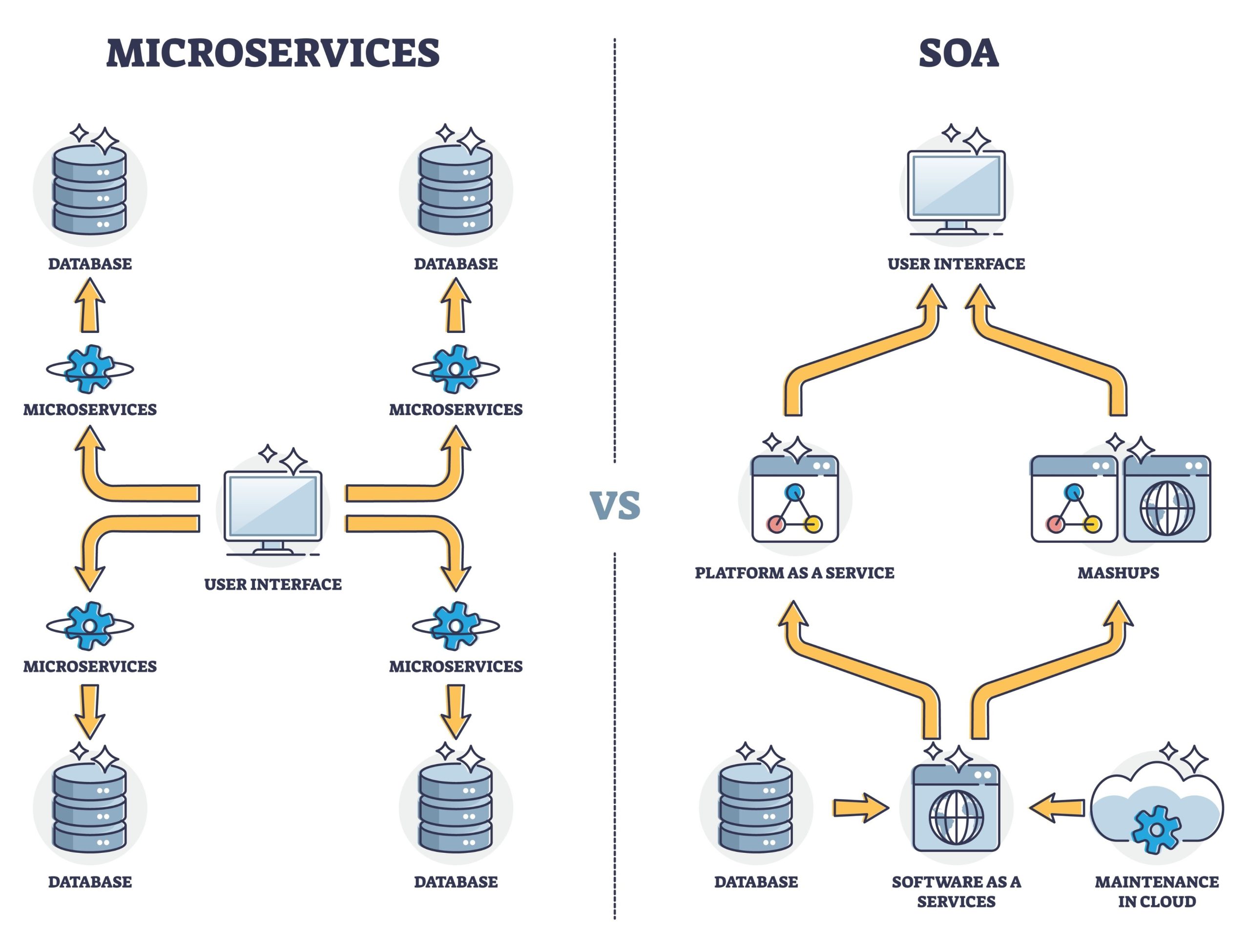
This is perhaps the biggest driver of the modern shift. When you host infrastructure on cloud platforms like AWS, scaling compute resources is fundamentally different from scaling databases.
-
Application Scaling (Horizontal): If your Node or .NET app gets hit with heavy traffic, you can spin up 10 more instances behind a load balancer easily and cheaply.
-
Database Scaling (Vertical): Scaling a relational database usually means buying a bigger, vastly more expensive server.
By moving CPU-intensive business logic to the application layer, you offload work from the hardest-to-scale component (the database) to the easiest-to-scale component (the app servers).
Comparing the Paradigms
| Feature | Stored Procedures |
Application Code (e.g., C#, JS)
|
| Performance (Data Heavy) | Excellent (Zero network latency) |
Moderate (Requires data transfer)
|
| Testing | Difficult, slow integration tests |
Easy, fast unit testing
|
| Version Control | Complex, often requires specialized tools |
Native, seamless Git integration
|
| Scalability | Expensive (Vertical scaling) |
Cheap (Horizontal scaling)
|
| Language Features | Limited (T-SQL, PL/SQL) |
Rich (OOP, Functional, large ecosystems)
|
| Refactoring | High friction, risk of breaking clients |
Low friction, excellent IDE support
|
The Modern Consensus: A Pragmatic Approach
If you are building a modern web application today—especially if migrating away from legacy systems to a fresh architecture—the industry consensus is to place business logic in the application layer. Using modern frameworks like .NET Core or Express, combined with an ORM (Object-Relational Mapper) like Entity Framework or Prisma, allows developers to build maintainable, testable, and scalable systems. The database should ideally be treated as a highly efficient, concurrent data store, enforcing data integrity (foreign keys, constraints, unique indexes) but not dictating business rules.
When to Break the Rule
Architecture is about trade-offs, and dogmatism rarely survives contact with production environments. There are specific scenarios where pushing logic down into the database via stored procedures is still the correct choice:
-
Massive Batch Processing: If you are building a system for the manufacturing sector and need to run a nightly reconciliation of 10 million inventory records, pulling that data into application memory will crash your server. A stored procedure is the right tool for heavy, set-based data crunching.
-
Legacy Integration: If you are refactoring older systems (such as migrating a classic VB application to a modern framework), you may need to interface with existing stored procedures that other legacy apps still depend on until a full rewrite is feasible.
-
Strict Security Compliance: In highly regulated financial environments, DBAs may mandate that certain critical transactions only occur via locked-down stored procedures to prevent any possibility of application-layer tampering.
The Final Verdict
For 95% of modern development use cases, keep your business logic in your application code. It optimizes for what matters most in modern software engineering: developer velocity, testability, and cloud scalability. Reserve your database for what it does best: storing data securely, enforcing relational integrity, and answering highly optimized queries.


Javier is Content Specialist and also .NET developer. He writes helpful guides and articles, assist with other marketing and .NET community work